Enhancing Electrical Infrastructure: Packaged Substation System Installation
Supply, installation support, and commissioning of 13 Schneider Electric packaged substations for the Nepal Electricity Authority across multiple sites in Bagmati Province, Nepal.
Project Overview
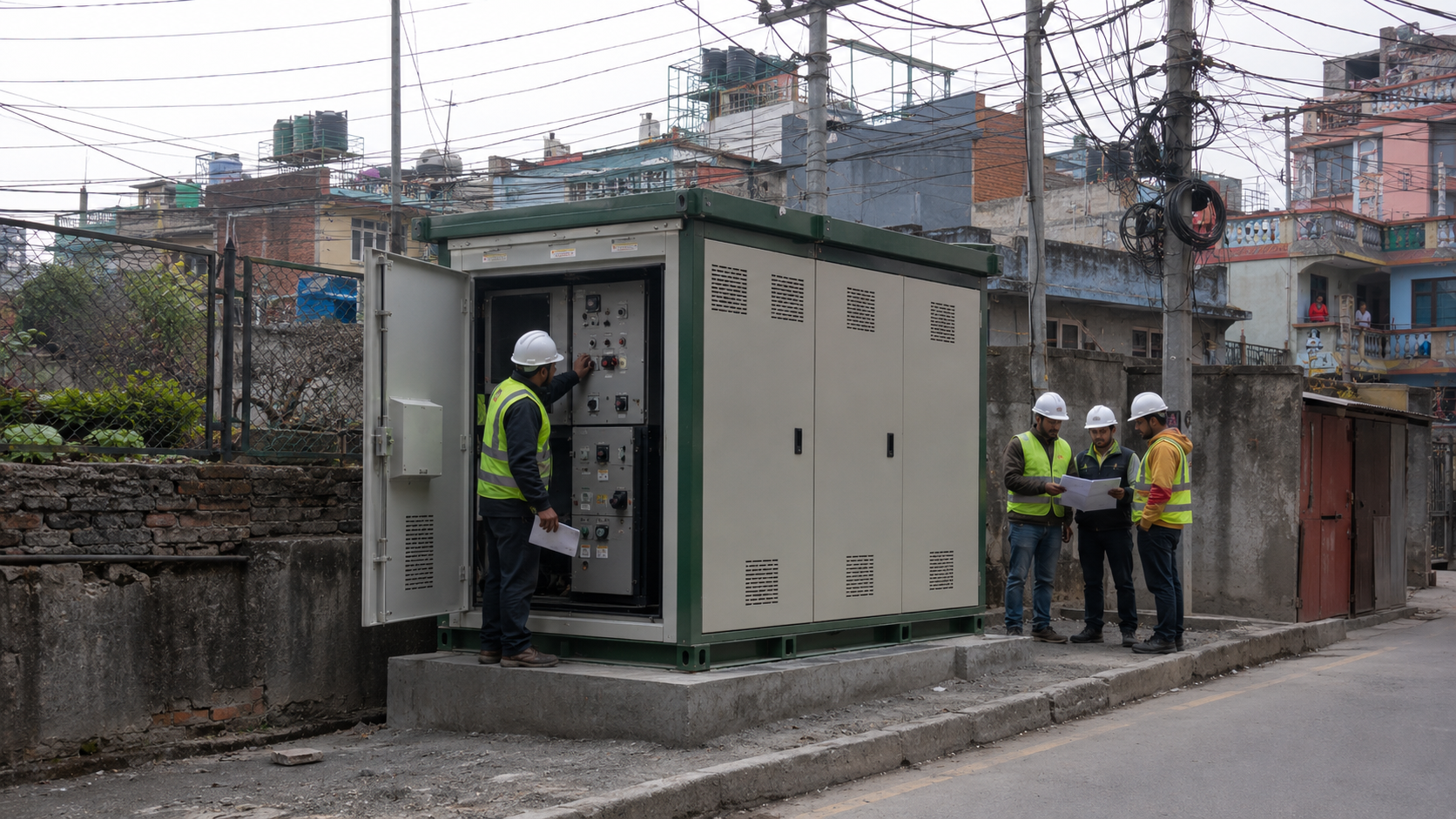
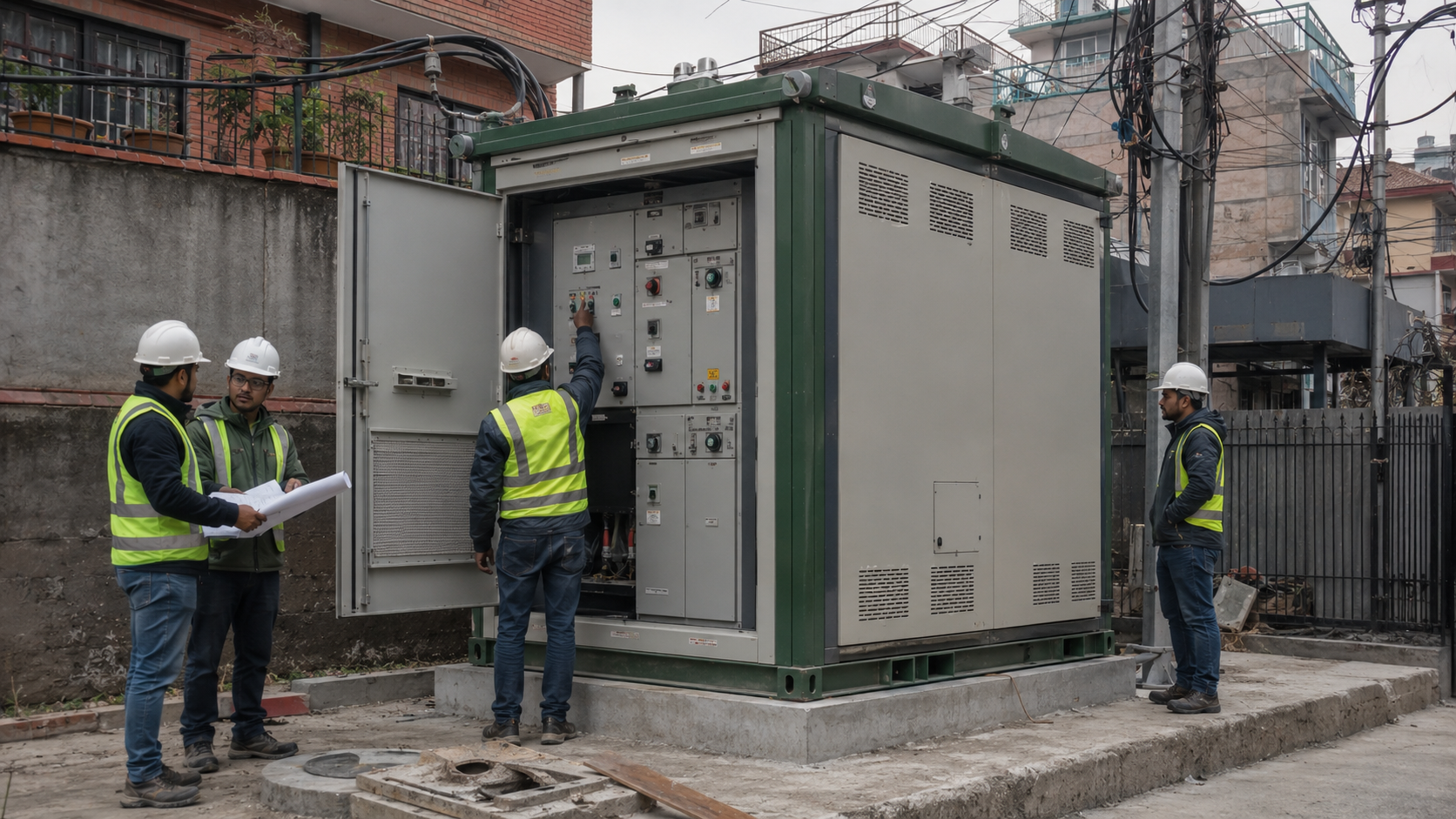
The project was executed for the Nepal Electricity Authority (NEA) with the objective of strengthening and modernizing urban electricity distribution infrastructure. It focused on the deployment of compact, factory-assembled packaged substations engineered to ensure efficient, reliable, and safe power distribution in space-constrained urban environments.
The substations, manufactured by Schneider Electric, were supplied as fully integrated and factory-tested units comprising high-voltage (HV) switchgear, power transformers, and low-voltage (LV) distribution panels. This integrated design enabled faster installation, improved system reliability, and reduced on-site construction complexity.
Installations were successfully carried out across multiple strategic locations, including a critical high-security deployment at the Prime Minister’s Office in Baluwatar, Kathmandu, demonstrating the project’s capability to handle sensitive sites and multi-location execution requirements.
Objectives
The project was designed to achieve the following system implementation and operational improvement objectives:
- To strengthen and modernize the urban power distribution infrastructure for improved performance and reliability
- To deploy a compact, factory-assembled package substation suitable for space-constrained and high-demand urban environments
- To minimize installation time, on-site civil works, and overall project execution complexity
- To ensure safe, reliable, and uninterrupted electricity distribution in compliance with technical and regulatory standards
- To enhance overall system efficiency, operational flexibility, and long-term scalability of the distribution network.
Key Deliverables
The project successfully included the supply, installation support, and commissioning of an integrated packaged substation system, ensuring full operational readiness at all deployment sites. The key deliverables are as follows:
- Supply and delivery of 13 packaged substations for utility-scale deployment
- Provision of factory-assembled and pre-tested units, including high-voltage (HV) switchgear, power transformers, and low-voltage (LV) distribution panels
- On-site installation support and commissioning assistance to ensure smooth integration with existing power infrastructure.
- Technical supervision, coordination, and guidance during site execution to maintain quality and compliance standards.
- Training and operational support provided to site personnel for safe handling, operation, and basic maintenance of the installed systems.
Challenges
The project involved the following system integration and operational challenges:
- Careful execution of the PSS installation at the Prime Minister’s Office in Baluwatar, Kathmandu, due to the high-security nature of the location
- Coordination with the utility teams for commissioning and system integration.
- Ensuring compliance with technical and safety standards
- Handling transportation logistics, operational challenges, and strict project time schedules during installation activities.
- Installation in space-constrained urban environments
Solution
The following implementation approaches and system integration measures were adopted to address the identified challenges:
- Deployment of compact, factory-tested package substations
- Use of standardized systems compliant with IEC standards
- Provision of installation supervision and commissioning support
- Integration of systems with existing distribution networks
Impact
The implementation of the packaged substation system resulted in the following operational improvements:
- Reduced installation and commissioning time compared to conventional substations.
- Lower maintenance requirements due to integrated and standardized design
- Reduced environmental and visual impact due to compact structure
- Enhanced electrical safety through enclosed and factory-tested equipment
- Improved system protection, monitoring, and fault isolation capability
- Enhanced operational continuity for sensitive administrative facilities
Conclusion
The project demonstrates strong experience in the supply, installation support, and deployment coordination of an integrated electrical infrastructure system for utility-scale applications. It highlights the ability to successfully manage site execution, technical coordination, and operational challenges in collaboration with public-sector organizations and utility stakeholders.
The successful implementation of packaged substations reflects proficiency in using standardized, factory-assembled solutions that minimize installation complexity, shorten commissioning time, and ensure compliance with required technical and safety standards. The project also showcases the ability to execute installations in space-constrained urban environments and high-security locations while maintaining operational efficiency and project quality.
Overall, the deployment of the packaged substations contributes to improved reliability, efficiency, and stability of urban power distribution systems, supporting future infrastructure development and enhanced service continuity for critical facilities.
Inspired by What You See?
We can help you bring similar innovations to life
Project Highlights