Nepal’s First Smart Street Light Project – Lalitpur Metropolitan City

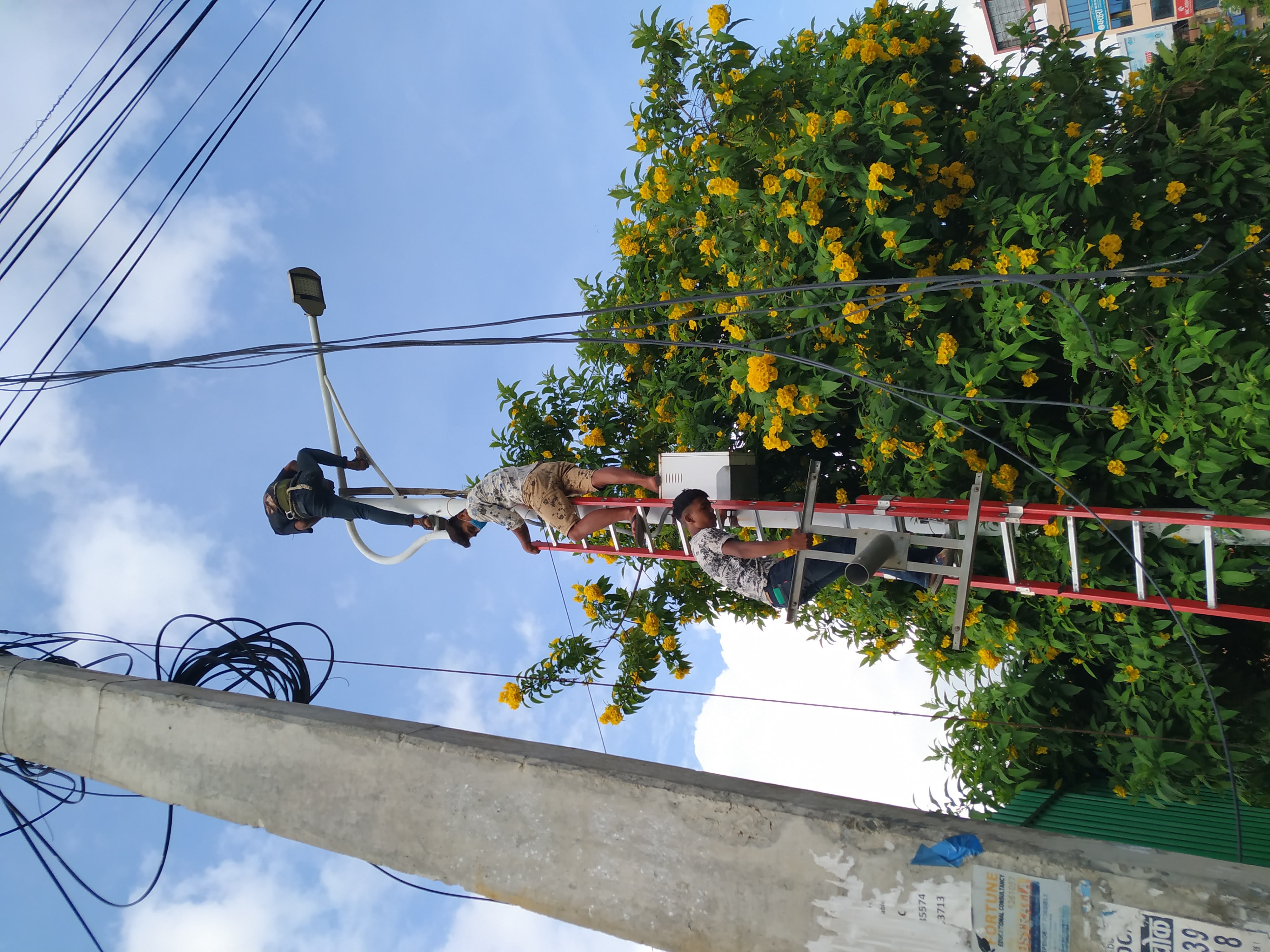
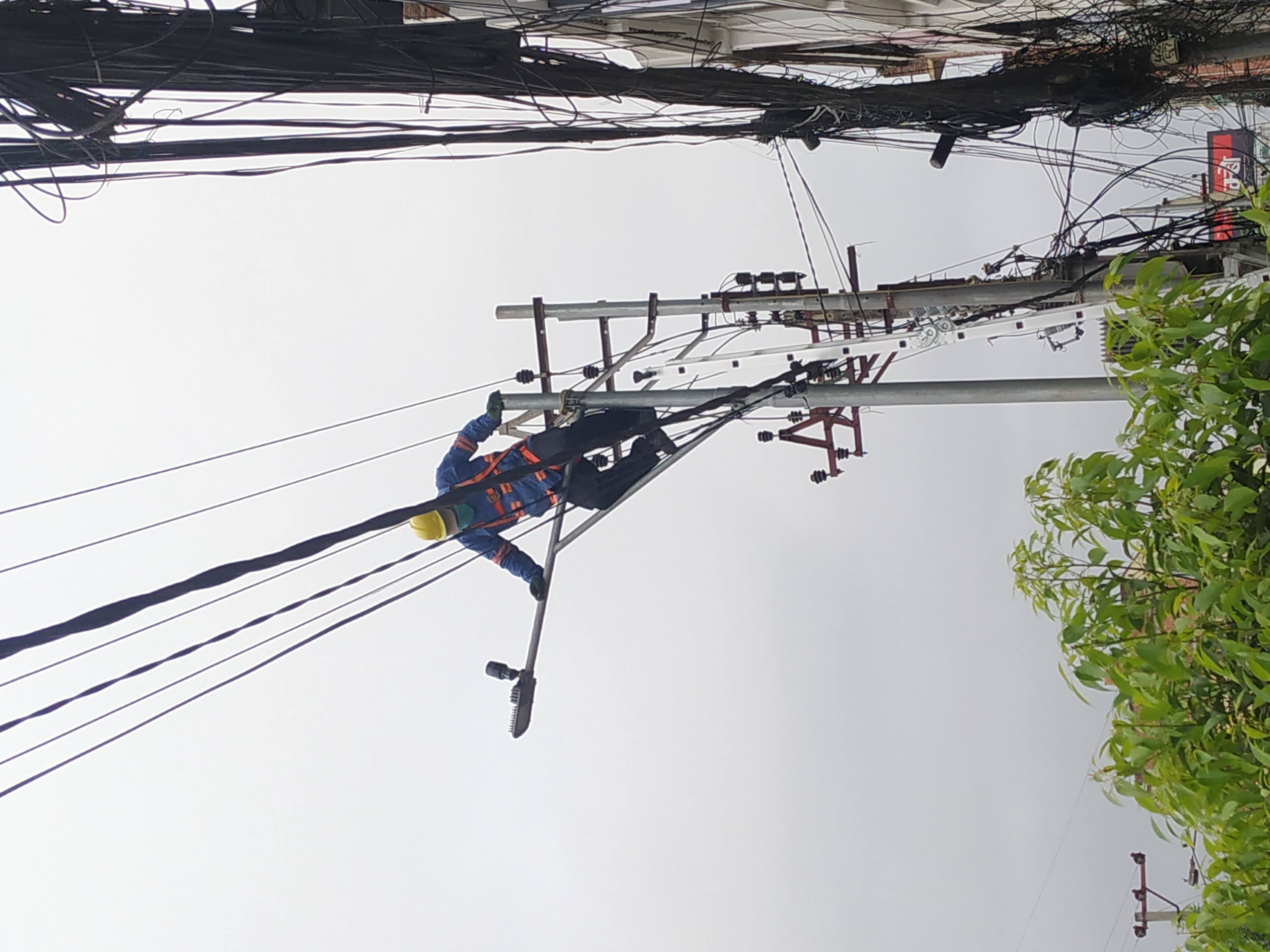
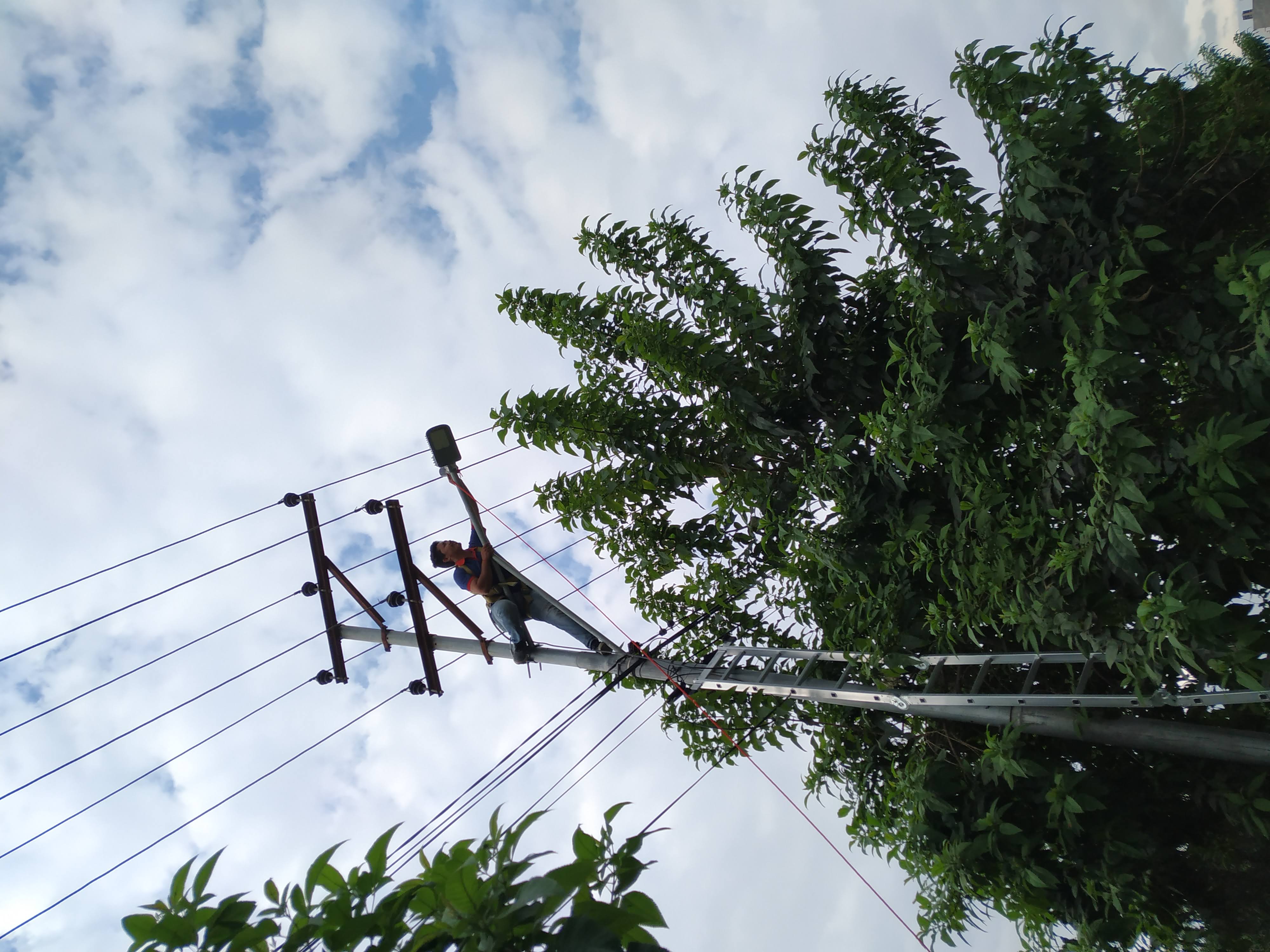
Nepal’s first smart street lighting project in Lalitpur, executed by MSIPL, introduced 669 energy-efficient LED lights with centralized remote control and monitoring.

ClientNepal Electricity Authority, Energy Efficiency and Loss Reduction Department
LocationLalitpur, Nepal
CompletedJul 2020
Duration2 years and 5 months

Project Overview

Scope

Design, Manufacturing, Supply, Delivery, Installation, Testing, Commissioning, and Maintenance during Warranty Period of LED Smart Street Lighting System including all accessories and Centralized Control and Monitoring System (CCMS)

Overview

Nepal Electricity Authority’s Energy Efficiency and Loss Reduction Department initiated a landmark smart street lighting project across selected roads in Lalitpur, one of Nepal’s most densely populated and historically significant cities. This project was part of NEA’s broader national objective to reduce energy losses, modernize urban infrastructure, and encourage the adoption of energy-efficient technologies in public services.

Lalitpur’s existing street lighting system relied on outdated, energy-intensive conventional fixtures that lacked remote management capabilities, resulted in high electricity consumption, and delivered inconsistent illumination. With increasing traffic and pedestrian activity, the demand for a more reliable, controllable, and energy-efficient lighting system became essential to enhance road safety, improve public convenience, and ensure responsible energy usage.

The project encompassed the complete end-to-end implementation of a modern LED Smart Street Lighting system across key roads in Lalitpur, integrated with a Centralized Control and Monitoring System (CCMS). This system enables real-time monitoring, remote dimming, fault detection, and intelligent scheduling of each luminaire through a single platform. The scope of work included detailed engineering design, equipment supply, civil and electrical installation, system integration, testing, commissioning, and warranty maintenance.


Objectives 

The Project was designed to achieve the following strategic and operational goal

• Replace conventional street lighting with energy-efficient LED luminaires to significantly reduce electricity consumption and operational costs across Lalitpur’s road network

• Deploy a Centralized Control and Monitoring System (CCMS) to enable real-time, remote management of the entire street lighting network from a single software platform

• Introduce intelligent dimming capability individual luminaires, enabling adaptive lighting based on traffic density, time of day, and ambient light conditions

• Enhance road safety and public comfort by providing consistent, high-quality illumination across all covered roads in Lalitpur

• Implement automated fault detection and real-time alarm management to enable rapid response to equipment failures and minimize outages

• Establish a scalable, open-architecture smart lighting platform capable of third-party integration and future expansion

• Ensure system resilience through autonomous fall-back operation, over-the-air (OTA) firmware updates, and weather-independent functionality

• Deliver full project execution including engineering design, civil works, installation, testing, commissioning, and performance demonstration within the warranty period


Key Deliverables

The Project delivered a fully integrated smart street lighting system across Lalitpur, encompassing the following components and works:

• 120 W LED Smart Street Lights, high-output luminaries for major arterial roads

• 80 W LED Smart Street Lights, mid-power luminaries for secondary roads

• 50 W LED Smart Street Lights, efficient luminaires for residential and inner roads

• 9 m Steel Tubular Poles, RCC foundations, mounting brackets, and hardware

• LT Power Cable, ABC Cable for overhead power distribution

• CCMS Server & Software, Lighting Management Software setup with server infrastructure

• Smart Control & Communication Systems

a. Centralized Control and Monitoring System (CCMS) providing a city map–view dashboard for real-time visibility of all luminaires

b. Individual smart controllers with dimming capability per luminaire, operated via radio frequency, ZigBee, LoRa, GPRS, WiFi communication protocols

c. Communication gateways with GSM connectivity linking each luminaire cluster to the central data server

d. Lighting Operations Management Software with policy-based automation  including adaptive scheduling, traffic-responsive dimming, and ambient light based adjustments

e. Instant alarm management with real-time fault localization and automatic SMS/email/call alerts to operators

f. Over-the-Air (OTA) firmware update capability for the entire network

g. Fall-back autonomous operation mode to prevent complete lighting failure during communication interruptions

h. Open-source architecture for seamless third-party system integration

• Civil, Electrical & Infrastructure Works

• Detailed site survey and road-by-road BOQ preparation of covered road network

• Design and installation of pole foundations in accordance with approved engineering drawings

• Complete earthing systems at all energy meter supply points

• Civil works including excavation, concreting, backfilling, pipe sleeving, and site restoration post-installation

• Dismantling and removal of existing legacy streetlight poles and luminaires where required

• Submission and approval of all as-built drawings, engineering calculations, data sheets, and statutory clearances


• Quality Assurance & warranty

• Manufacturing inspection and testing at works in accordance with an agreed Quality Assurance Procedure (QAP)

• Full joint inspection, testing, and performance demonstration at site with NEA representatives

• Operational acceptance certified by NEA’s Energy Efficiency and Loss Reduction Department

• Ongoing warranty maintenance including hardware and software upkeep, network management, and free replacement of any equipment that reaches end-of-life during the warranty period


Impact

The project has delivered lasting improvements to Lalitpur’s urban environment, energy efficiency, and public safety:

• A total of 669 LED smart street lights were successfully installed across Lalitpur’s road network, replacing energy-intensive conventional lighting with modern, high-efficiency luminaires that deliver significantly lower electricity consumption per lumen

• The CCMS platform gives Lalitpur Municipality and NEA complete real-time visibility and control over the entire street lighting network a first for the city enabling proactive maintenance, rapid fault response, and data-driven operational decisions

• Intelligent dimming reduces energy consumption during low-traffic hours (late night and early morning) while ensuring full illumination when and where it is needed most, optimizing both safety and cost efficiency

• Consistent, high-quality road illumination across urban roads has directly improved road safety and pedestrian comfort, reducing the risks associated with poorly lit streets at night

• Automated fault detection and instant alarm management minimize response times to equipment failures, ensuring higher system availability and reduced outage durations compared to the previous reactive maintenance model

• The project establishes a replicable smart city lighting model for Nepal, demonstrating the viability of intelligent, remotely managed public infrastructure in an urban Nepali context

• The open-architecture platform provides Lalitpur with a future-ready foundation for integration with broader smart city systems such as traffic management, environmental monitoring, and emergency services


Conclusion

The successful delivery of Lalitpur’s Smart LED Street Lighting project represents a significant milestone in Nepal’s journey toward smarter, more sustainable urban infrastructure. By replacing conventional streetlights with intelligent, remotely controlled LED luminaires backed by a comprehensive CCMS platform, the project has simultaneously advanced public safety, energy efficiency, and urban management capability in one of Nepal’s most important cities.

Executed under an International Competitive Bidding process and formally accepted by Nepal Electricity Authority’s Energy Efficiency and Loss Reduction Department, the project exemplifies the standard of end-to-end technical execution from detailed engineering design and quality-assured manufacturing through to rigorous commissioning and long-term warranty support that complex smart city infrastructure demands.

The project’s legacy extends beyond its immediate deliverables: it provides Lalitpur Municipality with a scalable, open-architecture platform ready to grow alongside the city’s evolving smart city ambitions, and it sets a benchmark for energy-efficient public lighting across Nepal’s urban centres.


Project Highlights

Gallery image 1
Gallery image 2
Gallery image 3