Certificate Distribution Ceremony

Procurement and Implementation of Electronic Flight Strip (EFS) System at GBIA

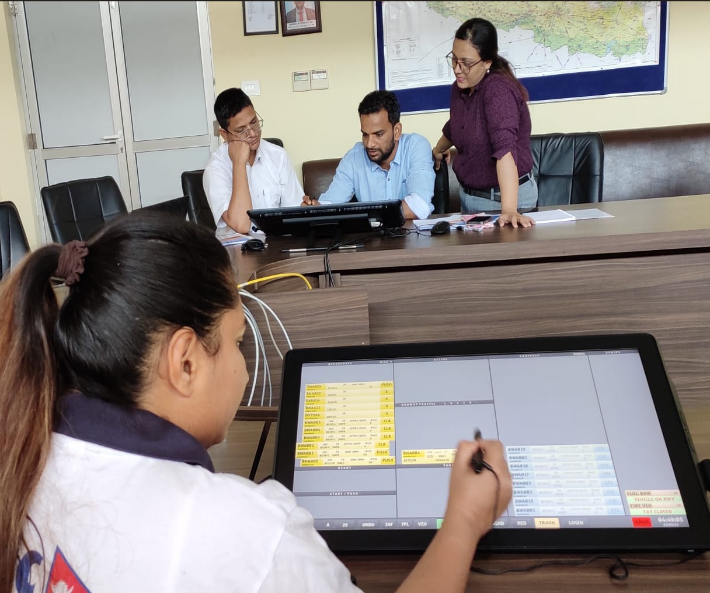
Mahavir Shree International Pvt. Ltd., in collaboration with ADB SAFEGATE Austria, successfully executed the full procurement, installation, training, and commissioning of a cutting-edge Electronic Flight Strip (EFS) System at Gautam Buddha International Airport (GBIA). This project was commissioned by the Civil Aviation Authority of Nepal (CAAN) under the National Pride Project initiative.

ClientCivil Aviation Authority of Nepal
LocationSiddharthanagar, Lumbini Province, Nepal
CompletedApr 2024
Duration1 year 2 months

Project Overview

Project Overview

The project was implemented within the aviation infrastructure sector under the National Pride Project of the Civil Aviation Authority of Nepal. It focused on initiating a formal procurement process for the supply and implementation of an Electronic Flight Strips system at Gautam Buddha International Airport.

The system was intended to replace or supplement conventional paper-based flight strip operations with a digital platform. The procurement followed an International Competitive Bidding methodology using a Single Stage Two Envelope procedure, ensuring separation of technical and financial evaluations.


Project Details

Project Name: Procurement of Electronic Flight Strips at GBIA

Client: Civil Aviation Authority of Nepal

Location: Siddharthanagar, Lumbini Province, Nepal

Start Date: 23rd February 2023

Completion Date: 30th April 2024

Project Duration: 1 year 2 months

Industry: Aviation & Airport Infrastructure

Scope: The Procurement of Electronic Flight Strips at Gautam Buddha International Airport


Objectives

The project was designed to achieve the following operational and procurement objectives:

● To procure a digital Electronic Flight Strips system for air traffic management

● To improve operational efficiency and accuracy in flight data handling

● To standardize procurement in line with national public procurement regulations

● To enable participation from qualified international and domestic bidders

● To ensure system compatibility with existing airport and air traffic infrastructure


Key Deliverables

The following documents, frameworks, and procurement components were developed and delivered as part of the project:

● Supply and installation of Baggage Handling System (BHS) including conveyors, screening integration, and reclaim systems

● Installation of Aeronautical Ground Lighting (AGL) across runway and airfield

● Procurement and commissioning of Airport Lighting Control and Monitoring System (ALCMS)

● Installation of flood lighting control panels for airfield illumination

● Supply and installation of GRP poles for approach lighting systems (PALS-28 & SALS-10)

● Installation of Constant Current Regulators (CCR) and Airfield Switching & Outlet (ASO) equipment

● Deployment of terminal wayfinding signage systems

● Installation and commissioning of elevators in the International Terminal Building


Challenges

The project involved the following procurement and process-related challenges:

● Coordination of multiple system installations within a high-security government environment

● Compliance with both European and American equipment standards

● Integration of new electrical and control systems with existing infrastructure

● Logistical management of equipment delivery, handling, and installation


Solution

● The following structured approaches and methodologies were adopted to address the identified challenges:

● Adoption of structured procurement under National Competitive Bidding (NCB) procedures

● Use of standardized installation practices aligned with international standards

● Implementation of phased installation and testing for different system components

● Strict adherence to technical specifications and site engineer supervision


Impact

The implementation of the procurement framework contributed to the following outcomes:

● Enabled operational helipad functionality with complete lighting systems

● Improved fire safety preparedness at the facility

● Strengthened security screening at entry points

● Established integrated infrastructure for high-level government operations


Conclusion

The project significantly enhances operational efficiency, safety, and system reliability by integrating advanced technologies and standardized infrastructure. Through effective implementation of modern systems and coordinated execution, it ensures smooth operations and improved service capability.

Overall, the project delivers a robust, secure, and future-ready infrastructure, supporting high-level operational requirements and long-term sustainability.


Project Highlights

ATC Officers Operating the EFS Interface
EFS Control Working Position (CWP) Displays
EFS Server Rack – Front View
EFS Server Rack – Rear Views